Why some men take hCG alongside testosterone, what it does for fertility and testicular size, what the evidence shows and what monitoring involves.

hCG (human chorionic gonadotrophin) is sometimes prescribed alongside TRT to keep the testes working while you take testosterone. It can help maintain sperm production and testicular size, but it does not guarantee fertility and needs extra monitoring. Using it with TRT is off-label in the UK and should be a considered decision with your prescriber, not a default add-on.
Your brain controls the testes using luteinising hormone (LH) and follicle-stimulating hormone (FSH). When testosterone comes from a medicine, the brain senses enough testosterone and reduces those signals. Without LH, testosterone production inside the testes falls sharply, sperm production drops and the testes can shrink. Read our TRT and fertility guide for the wider picture.
hCG acts like LH. It stimulates the testes directly, so they keep making testosterone internally even while the brain's own signal is suppressed. That internal testosterone is important for sperm production.
These studies were small and relatively short. Results vary between men, and sperm production can still fall. If fertility is the goal, semen analysis is the only way to check.
For men with no fertility plans and no concern about testicular size, testosterone alone is often enough. Your prescriber should explain the benefits, costs and monitoring before adding it.
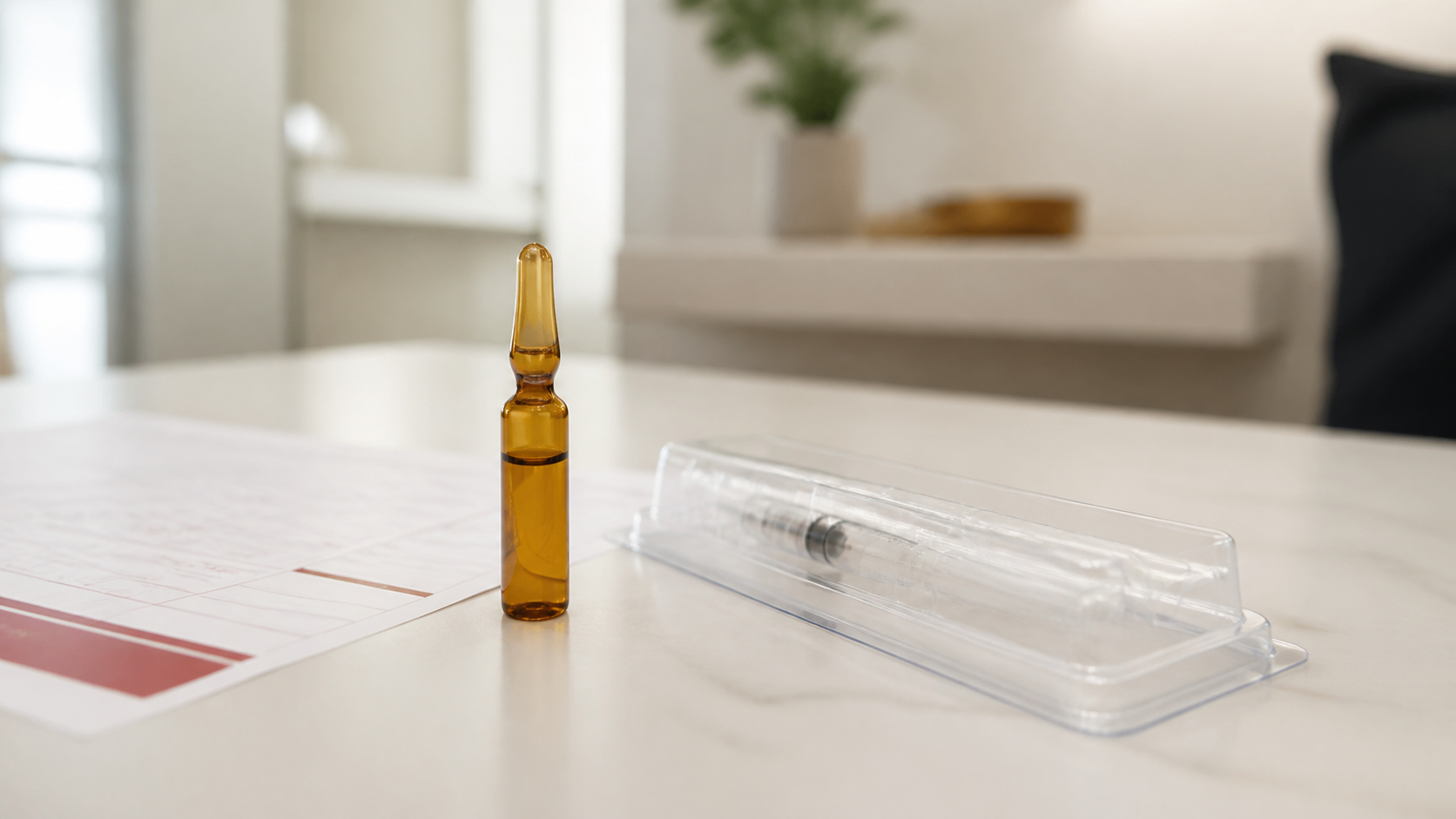
hCG is an injection, usually given under the skin several times a week, with a dose and schedule set by your prescriber. It is supplied as a powder or solution and has specific storage instructions, so follow the leaflet for your product. Our guide to injection sites and technique covers safe self-injection.
Because hCG stimulates the testes to make more testosterone, it also tends to raise oestradiol, which can cause breast tenderness or fluid retention. Other possible effects include headache, mood changes and injection-site reactions. Monitoring usually includes testosterone, oestradiol and a blood count, with semen analysis when fertility is the reason for treatment.
hCG is a prescription-only medicine. Its cost and availability vary, and it is usually charged on top of a TRT plan. At Heracles, hCG is charged separately from the monthly TRT plan, and your clinician explains the cost before prescribing. See TRT cost in the UK for what is included.
If preserving fertility is the main goal, some men are better suited to treatments that raise their own testosterone, such as clomifene, rather than TRT with hCG. Read about enclomiphene and clomifene, and discuss your plans with a specialist. To start, check your testosterone, or if you are already on TRT, book a free switch consultation.
To keep the testes working while on testosterone, which can help maintain sperm production and testicular size. It is mainly used by men who may want children.
No. Studies show it helps many men maintain sperm production, but results vary. Semen analysis is the only way to confirm fertility.
Usually under the skin a few times a week, at a dose your prescriber sets. Follow the instructions for your product, including how to store it.
It can. hCG increases testosterone production in the testes, and some of that is converted to oestradiol. Monitoring checks for this.
Not always. If you have no plans for children and no concerns about testicular size, testosterone alone is often enough. Discuss it with your prescriber.