Doctor-led treatment to help you feel more in control and stay in the moment

Tell us what’s happening
Complete a confidential online assessment
Choose what suits you
Compare treatments and select a treatment that's right for you
Delivered discreetly
If prescribed, treatment arrives in plain packaging

PE is when ejaculation happens sooner than you want, with too little control, and causes frustration or distress.Source: EAU guidance on premature ejaculation.
PE can be lifelong or begin later. When it starts later, erections, anxiety, prostate symptoms or thyroid problems may be involved.Source: EAU guidance on causes and subtypes.
Suitable routes can include oral treatment, topical treatment and psychosexual support, depending on the pattern and what suits you.Source: EAU guidance on treatment.
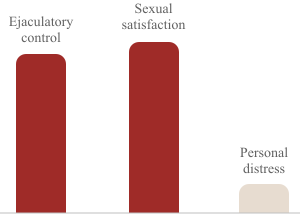
PE is common, and successful treatment is about more than lasting longer.
Premature ejaculation, or PE, is when you regularly ejaculate sooner than you want during sexual activity, feel unable to control it and find that it causes frustration, distress or relationship difficulties. Occasional early ejaculation is normal. It becomes worth addressing when it happens repeatedly and affects your confidence, relationships or enjoyment of sex.Source: EAU definition of premature ejaculation.
There is no single “normal” length of time that sex should last, and PE cannot be diagnosed using a stopwatch alone. Lifelong PE is often associated with ejaculating within around one minute of penetration, but control, distress and sexual satisfaction are equally important. If you consistently finish sooner than you want and cannot delay ejaculation, a clinical assessment may help.Source: EAU diagnostic guidance.
Lifelong PE has been present from a person’s earliest sexual experiences and happens during most sexual encounters. Acquired PE develops after a period of previously normal ejaculation control. Acquired PE may be connected to erectile dysfunction, stress, relationship difficulties, prostate problems, thyroid conditions or other health changes, so identifying and treating the underlying cause is important.Source: EAU subtypes and acquired PE.
PE can have psychological, physical or combined causes. Possible contributors include performance anxiety, stress, depression, relationship difficulties, erectile dysfunction, prostate or thyroid problems and increased penile sensitivity. Sometimes there is no single identifiable cause. A GP or Urologist consultation helps determine whether treatment should focus on delaying ejaculation, addressing an underlying condition or both.Source: EAU causes and assessment.
PE is usually treatable, but “permanent cure” is not the right expectation for everyone. Acquired PE may improve when an underlying cause such as anxiety, erectile dysfunction or a prostate problem is treated. Lifelong PE may require ongoing management with medication, topical treatment or behavioural techniques. Many men can significantly improve their control and sexual satisfaction with the right approach.Source: EAU treatment guidance.
The best option depends on whether your PE is lifelong or acquired, whether you also experience erectile dysfunction, your medical history and how spontaneously you want to have sex. Options include dapoxetine tablets, lidocaine/prilocaine topical treatments, other medicines prescribed off-label, psychosexual therapy and techniques such as stop-start exercises. A clinician can help identify the most appropriate option.Source: EAU treatment recommendations.
Dapoxetine, sold under the brand name Priligy®, is a short-acting selective serotonin reuptake inhibitor. It increases serotonin activity involved in controlling ejaculation and is the only oral medicine specifically licensed in the UK for PE. In clinical studies, the licensed 30mg and 60mg doses increased average time to ejaculation by approximately 2.5 and three times respectively, although individual results vary.Source: Priligy product information.
The usual starting dose is 30mg, taken between one and three hours before sex with a full glass of water. It can be taken with or without food and must not be taken more than once within 24 hours. A clinician may increase the dose to 60mg if necessary and safe. Always follow your prescription rather than changing the dose yourself.Source: Priligy dosing guidance.
Common dapoxetine side effects include nausea, dizziness and headache. It can also cause low blood pressure or fainting, particularly when standing up quickly. Taking it with a full glass of water can help reduce this risk. Avoid alcohol because it can increase dizziness, drowsiness and the risk of fainting. Do not drive if the medicine makes you dizzy, sleepy or unable to concentrate.Source: Priligy safety information.
Dapoxetine is generally intended for men aged 18 to 64 and is not suitable for everyone. It may be unsuitable if you have certain heart, liver or kidney conditions, a history of fainting or particular mental health conditions. It also interacts with some antidepressants and other medicines. Give your prescriber a complete list of medicines, supplements and recreational drugs during your consultation.Source: Priligy contraindications and interactions.
Topical treatments containing local anaesthetics such as lidocaine or prilocaine reduce sensitivity in the head of the penis, helping delay ejaculation. Licensed lidocaine/prilocaine spray can work within approximately five minutes. Possible side effects include penile numbness, irritation and difficulty maintaining an erection. The product must be applied exactly as directed.Source: Fortacin product information.