Feel like yourself again.

Doctor-led TRT, tailored to you. Start with a blood test.

Doctor-led plans
Prescribed and monitored
Blood tests included
6 weeks, 3, 6 and 12 months
Plans from £90/month
Three-month minimum
CQC-regulated
Registered Pharmacy
Results in 2–5 working days
UK-based clinicians
CQC-regulated
Registered Pharmacy
Results in 2–5 working days
UK-based clinicians
CQC-regulated
Registered Pharmacy
Results in 2–5 working days
UK-based clinicians
CQC-regulated
Registered Pharmacy
Results in 2–5 working days
UK-based clinicians
CQC-regulated
Registered Pharmacy
Results in 2–5 working days
UK-based clinicians
CQC-regulated
Registered Pharmacy
Results in 2–5 working days
UK-based clinicians
CQC-regulated
Registered Pharmacy
Results in 2–5 working days
UK-based clinicians

What's included

More than a prescription

Blood tests and doctor reviews are built into your first year of treatment.

Blood Tests

6 weeks, 3, 6 and 12 months

Doctor Reviews

Symptoms and results considered together

Plan Updates

Dose adjusted when clinically appropriate

TRT explained

Could it be low testosterone?

Low testosterone can affect sex drive, energy and mood. These symptoms can have other causes.

EAU guidance on symptoms
How is it confirmed?

A doctor considers your symptoms alongside low morning testosterone on two separate blood tests.

EAU diagnostic guidance
What if my result is low?

Further blood tests and a doctor’s review help decide whether TRT is suitable, including any fertility considerations.

Endocrine Society guidance
What’s included?

Prescribed treatment, supplies, scheduled blood tests and doctor reviews. See the plan details and FAQs below.

How common is low testosterone?

1 in 4

Around a quarter of men aged 30–79 had low total testosterone in a US study.1

55%

of UK men surveyed didn’t recognise the signs and symptoms of low testosterone.2

1 in 20

UK men surveyed reported having been diagnosed with low testosterone.2

1. Araujo et al., 2007: 24% of 1,475 US men had total testosterone below 300 ng/dL; low levels alone do not establish a diagnosis. 2. Liu et al., 2025: UK survey of 973 men; 55% were unfamiliar with symptoms and 5% reported a diagnosis. These are separate study populations, not stages of one group.

What to expect from TRT

The journey back to feeling yourself

Weeks 1–4

Weeks 1–6

Reignite the spark

Sexual interest can be one of the first changes. Some men also report a brighter mood, clearer focus and a renewed sense of drive.

Weeks 6–12

Weeks 3–6

Feel switched on again

Desire, confidence, motivation and concentration may feel more consistent. Fatigue and “brain fog” may begin to ease.

Months 3-6

Months 2–3

Build real momentum

Strength and lean mass may begin to rise as fat mass starts to fall. Mood, sexual satisfaction and everyday wellbeing can continue improving.

Months 6-12

Months 3–6

See and feel the difference

Changes in strength and body composition become more established, sexual wellbeing may continue to improve, and bone health begins building beneath the surface.

At 12 Months

Months 6–12

Own your new baseline

A complete review brings the transformation into focus—how you feel, how you perform and what your monitored results show.


After 12 Months

At 12 months

Protect your progress

Personalised treatment, lifestyle support and ongoing monitoring help sustain progress, while improvements in bone health may continue for years.

Weeks 1–6

Reignite the spark

Sexual interest can be one of the first changes. Some men also report a brighter mood, clearer focus and a renewed sense of drive.

Weeks 3–6

Feel switched on again

Desire, confidence, motivation and concentration may feel more consistent. Fatigue and “brain fog” may begin to ease.

Months 2–3

Build real momentum

Strength and lean mass may begin to rise as fat mass starts to fall. Mood, sexual satisfaction and everyday wellbeing can continue improving.

Months 3–6

See and feel the difference

Changes in strength and body composition become more established, sexual wellbeing may continue to improve, and bone health begins building beneath the surface.

At 12 Month

Own your new baseline

A complete review brings the transformation into focus—how you feel, how you perform and what your monitored results show.

Feel more like yourself

And see whether hormones are part of the picture

More energy
Better sleep
More strength
Faster recovery
More desire
Sharper focus
Healthier weight
More clarity

How treatment works

Testosterone treatment personalised to you

1

Check your levels - £29.99

Start with a morning testosterone test and health assessment.

2

Confirm the result - £129.99

If it’s low, a fuller blood panel checks the wider hormonal picture.

3

Doctor reviews - Included with a low result

Your symptoms, results and medical history are considered together.

4

Start treatment - From £90/month

Medication and supplies are delivered if TRT is prescribed.

5

Review your plan

Blood tests at 6 weeks, 3, 6 and 12 months guide your treatment.

Clinical evidence

Treatment outcomes that matter

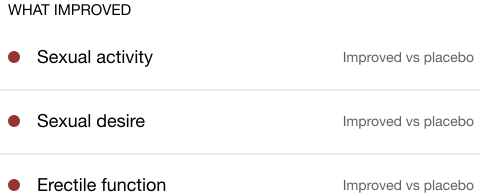
Clinical evidence looks beyond testosterone levels to sexual activity, desire and erectile function.

TRIAL OUTCOME

Testosterone improved 10 of 12 measures of sexual activity.

Compared with placebo over 12 months.
THE STUDY

470 men were followed for one year.

All were aged 65+, had low libido and average testosterone below 275 ng/dL. Testosterone gel was compared with placebo.
1. Cunningham et al., Journal of Clinical Endocrinology & Metabolism (2016). Treatment outcomes vary.

Testimonials

What people say about Heracles

Customer service has been superb. They get back to me almost instantly and I don’t have to deal with a chatbot.

Joshua H.

The improvement in my overall wellbeing has been remarkable.

Wayne W.

The health expert I was given was absolutely fantastic and has really made my own health journey so much easier.

Chris H.

What I was really looking for was a service that treated me as an individual rather than just another customer. I have always felt that my progress and wellbeing mattered

Luke

Three ways to treat low testosterone

Your doctor will help you choose an option that suits your results, daily routine and future plans.

Timelines vary by person, symptom and treatment response.

Injectables

What it does

Replaces testosterone directly

Routine

Injected on a schedule set by your doctor

Results From

Some changes may be felt within 3–6 weeks. Others can take several months

Oral Tablets

What it does

Helps your body produce more testosterone.

Format

Tablets taken as prescribed

Results From

Blood testosterone may rise within 4–6 weeks, but symptom improvement varies

Gels

What it does

Replaces testosterone through the skin

Format

Gel applied daily to the inner thigh

Results From

Some changes may be felt within 3–6 weeks. Others can take several months

Injectables

What it does

Replaces testosterone directly

Routine

Injected on a schedule set by your doctor

Results From

Some changes may be felt within 3–6 weeks. Others can take several months

Oral Tablets

What it does

Helps your body produce more testosterone.

Format

Tablets taken as prescribed

Results From

Blood testosterone may rise within 4–6 weeks, but symptom improvement varies

Gels

What it does

Replaces testosterone through the skin

Format

Gel applied daily to the inner thigh

Results From

Some changes may be felt within 3–6 weeks. Others can take several months

Our clinical team

Men's health takes more than one type of specialist

Prof. Tet Yap
Consultant Andrological Surgeon · Co-Founder
Prof. Suks Minhas
Consultant Urologist & Andrologist Co-Founder, Chief Medical Officer
Mr Peter Grice
Clinical Lead, Consultant Andrologist & Urologist, Imperial
Dr. Ian Gallen, CBE
 Consultant Endocrinologist · Medical Advisor, London 2012 Olympics
Dr. Vinit K. Shah
Consultant in Endocrinology, Diabetes & Internal Medicine
Dr. Richie Kirwan, PhD RNutr
Senior Lecturer in Nutrition & Exercise Physiology
Paula Allchorne
Urological Nurse & Psychosexual Therapist

Questions about Heracles TRT plans

Explore our testosterone guides
What is low testosterone?

Low testosterone—also called testosterone deficiency or hypogonadism—is diagnosed when relevant symptoms are supported by repeatedly low morning testosterone results. One low result is not enough.Source: EAU definition and diagnosis.

What are the symptoms of low testosterone?

Lower sex drive, fewer morning erections and erectile difficulties are the most specific signs. Lower energy, strength, motivation or concentration can also occur, but these symptoms have other possible causes.Source: EAU guidance on symptoms.

Can the at-home test diagnose low testosterone?

The four-marker finger-prick test is an initial check, not a final diagnosis. A low or borderline result needs confirmation with morning venous tests on separate occasions before treatment is considered.Source: Endocrine Society diagnostic guidance.

What happens if my result is normal or borderline?

A borderline result may need repeating or investigating with a wider blood panel. If your testosterone is normal, TRT may not be appropriate and other explanations for your symptoms should be considered.Source: EAU repeat-testing guidance.

Who is TRT for?

TRT may be considered for adult men with relevant symptoms and consistently low testosterone. Your medical history, current medication, cardiovascular health, prostate health and fertility plans are reviewed first.Source: Endocrine Society treatment criteria.

Is TRT the same as taking anabolic steroids?

No. TRT uses prescribed testosterone to restore confirmed low levels to a monitored range. Non-medical anabolic steroid use commonly aims for much higher levels without the same clinical controls.Source: EAU guidance on therapeutic testosterone.

How is my treatment chosen?

Your doctor considers your symptoms, blood results, health and fertility plans. They explain the suitable routes, risks and full recurring cost before anything is prescribed.Source: Endocrine Society treatment guidance.

Does TRT affect fertility?

Yes. Standard TRT can suppress sperm production and may not be appropriate if you are trying for a child. Tell your doctor before starting so fertility-preserving options can be included.Source: EAU guidance on TRT and fertility.

How quickly does TRT work?

Response is assessed over months, not days. Some sexual symptoms may change earlier, while changes in body composition can take longer. Treatment continues only when your symptoms and results support it.Source: Review of TRT response timelines.

Does TRT increase the risk of prostate cancer?

Current evidence has not shown that properly prescribed TRT increases prostate cancer risk, but long-term evidence remains limited. PSA and prostate health are assessed where appropriate, and TRT is not normally prescribed to men with active prostate cancer.Source: EAU prostate safety guidance.

Is TRT safe for my heart?

Your cardiovascular history and risk factors are reviewed before treatment. Men with heart disease, heart failure or a history of blood clots may need additional assessment and closer monitoring.Source: TRAVERSE cardiovascular safety trial.

What is included in my Heracles TRT plan?

Your plan includes your prescribed treatment and the supplies required to take it, where applicable. Scheduled blood tests and doctor reviews are also included. Additional treatments and services are charged separately; your clinician will explain any extra costs before you agree.

How much does TRT cost?

Plans start from £90 per month. Your recommended plan and full recurring cost are explained after clinical assessment, before you commit. TRT is billed monthly with a minimum three-month contract. If you cancel during that minimum term, the remaining payments for the agreed term are still due, subject to your statutory rights. Additional treatments and services may cost extra.

Can I transfer my TRT care to Heracles?

Yes, subject to clinical review. You will need to provide your current prescription, treatment schedule and recent blood results. A Heracles doctor will confirm whether your existing treatment can safely continue.

Clinically reviewed by Peter Grice, Heracles Clinical Lead · September 2026